


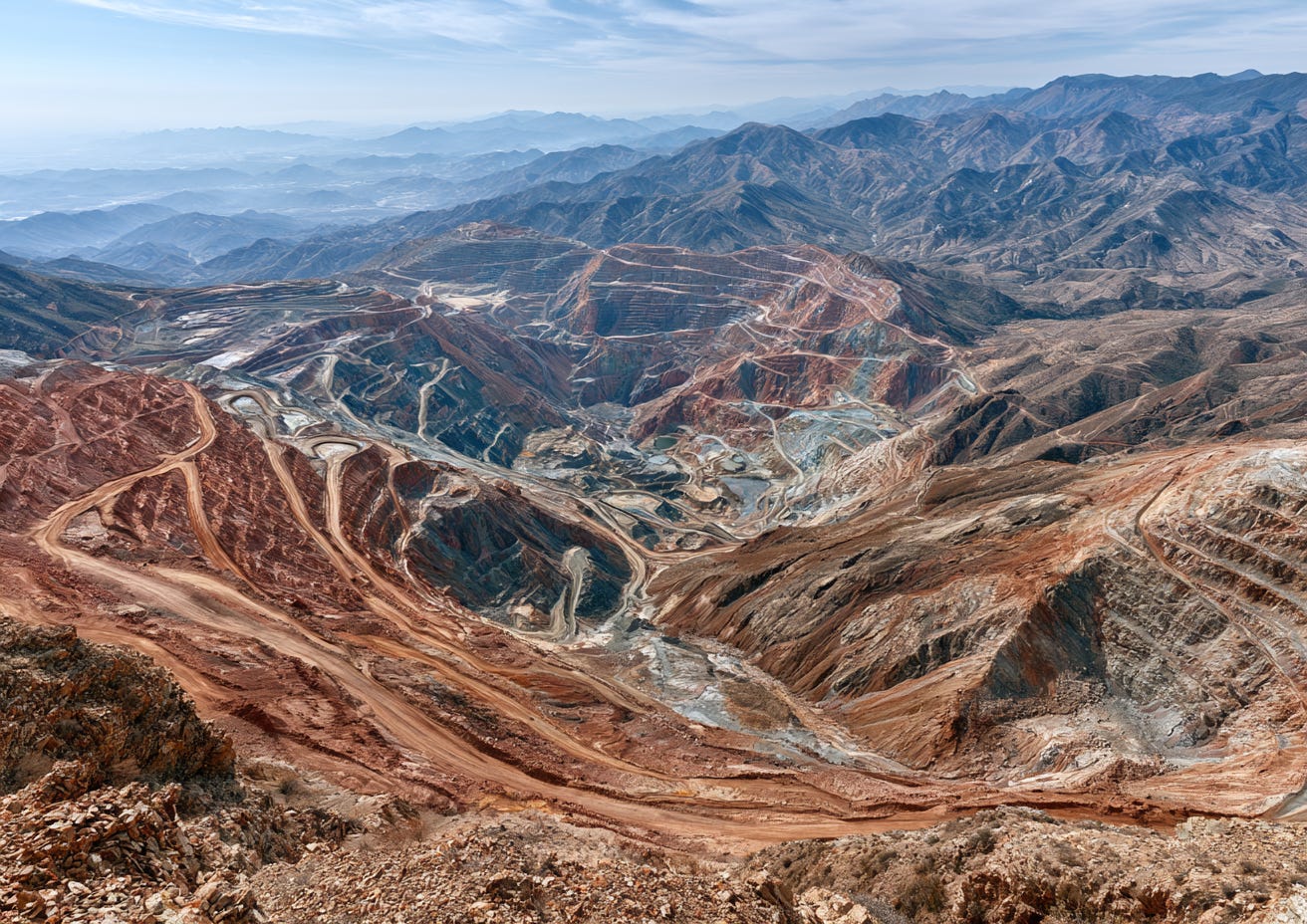
Well, here it is, finally. The pick of my Namibia tips.
As you know I have looked at pretty much every investment story in Namibia, and this is the one that has impressed me the most. It could amount to as much as 10% of the country’s GDP.
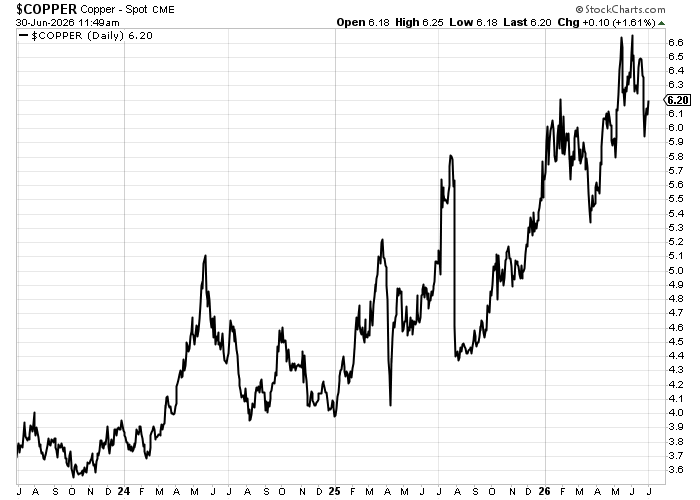
It’s a copper story, so let’s start with a quick 3-year chart of copper.
You can see that, despite the carnage elsewhere in precious metals and oil, the copper price remains in a clear uptrend.
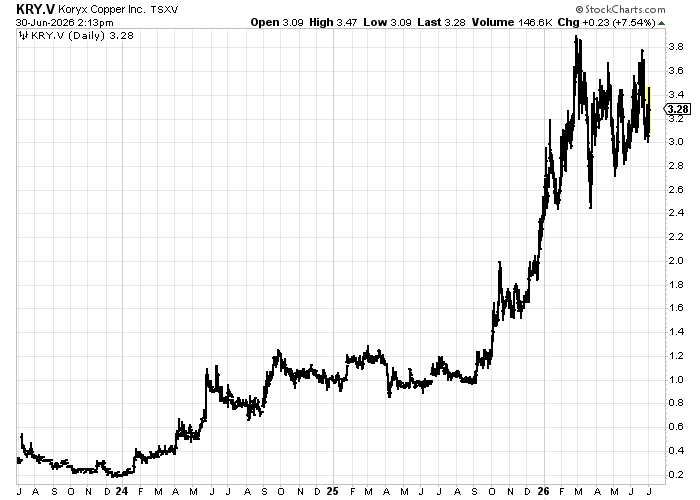
This particular company is perhaps not the opportunity it was 2 years ago, when it was little more than a penny stock, but it has been significantly de-risked.
I’ve been waiting patiently for the price of this C$400 million market cap company to come back before covering it, but it has steadfastly refused to do that.
Nevertheless, the time has come to put pen to paper.
My simple view: it gets taken out by a major within 18-36 months at twice today’s prices or more.
A quick word on copper
I covered the case for copper at considerable length last month, but briefly, whether it’s AI, electrification or a manufacturing renaissance, all roads lead to copper. More of a reddish brick road, than yellow, if you catch my drift.
Electric vehicles, data centres, power grids, wind turbines, solar farms and, yes, the army - they all need copper.
Copper discoveries, meanwhile, have become increasingly rare. Existing mines are ageing, ore grades (the amount of metal in rock) are getting lower and mine permitting is (in most but not all placers) getting trickier. Large, mineable copper deposits in investible jurisdictions are not so easy to find.
Which brings us back to Namibia.
It’s not Canada, the US, Chile or Australia, that’s for sure. Until two months ago, I couldn’t even tell you where Namibia is on the map. Now I’m one of country’s biggest champions.
The place is on the up and it has quietly become one of the most attractive mining jurisdictions in the world. A tiny desert nation of just 4 million people, it is the world’s third largest uranium producer. Oil has just been discovered off the coast and there is gold, copper and lithium in abundance. Diamonds too, though best not to dwell on these.
It has a long mining history. Property rights are comparatively strong. There is rule of law. Corruption is low by regional standards. Infrastructure is good: roads, ports, power.
This deposit sits in southern Namibia, close to the border with South Africa. It has quietly grown into one of the larger undeveloped copper deposits on the planet. There may be plenty of small copper deposits around the world with higher grades. There not so many capable of supporting decades of production - and that’s what majors are looking for.
In the words of the company itself, it is “optimizing, right-sizing and de-risking the project towards an investment decision and/or asset/equity sale.”
The CEO has no intention of building a mine. He is getting everything in place for a mine to be built, and then he will sell to a major - for probably two to three times the current market cap of the company.
That’s how I see it anyway.
Koryx Copper (TSXV: KRY)’s flagship asset, the Haib project, is not a new discovery. The deposit was originally worked on by Rio Tinto and later Teck. Two or three years back, Koryx CEO Heye Daun took on a somewhat neglected copper project, dismissed for its low grade, and, with his team, has spent the last few years systematically proving how mineable it actually is.
Haib is low grade. But, like many classic porphyries, it is also large. Porphyry size often compensates for grade, provided metallurgy and infrastructure cooperate.
The higher-grade portion of the deposit, according to the company’s updated resource estimate, now totals 571 million tonnes grading approximately 0.4% copper equivalent. This equates to over than fifteen years of potential production, according to analysts (Just from the higher grade material).
The latest resource estimate now stands at a 1.32 billion tonnes overall containing 7.6 billion pounds of copper, 187 million pounds of molybdenum and almost 900,000 ounces of gold. These are not trivial numbers, and in mining scale matters.
Last year’s Preliminary Economic Assessment outlined a project producing roughly 88,000 tonnes of copper annually over a 23-year mine life (Daun thinks it can last 30-50 years, and is now talking about 100,000 tonnes annually - so that is one of the goals the company is working towards). The headline figures were impressive: a post-tax NPV of US$1.35 billion, an IRR of just over 20%, an initial capital cost of US$1.6 billion and a payback period of under four years.
The company envisages a conventional milling and flotation operation supplemented by a heap-leach circuit. Put another way, the grade may be low, but the mining is a straightforward (ish) open pit project similar to the Andean operations found in Chile and Argentina
Average flotation recoveries have been running around 89%, producing a clean copper concentrate with few penalty elements. The molybdenum and gold further enhance the project economics. Ore sorting and coarse particle flotation studies are also showing encouraging results, potentially allowing waste material to be rejected before milling, thereby improving economics further.
These are exactly the sort of developments investors (and large mining companies) like to see. Every improvement in recovery rates, operating costs and throughput improves project value.
A giant copper deposit in the middle of nowhere is worth far less than a giant copper deposit connected to roads, power and ports. Haib should be ok. It is about 10 miles from a major paved highway (railways - poor in Namibia - are further). Namibia’s ports are good - and accessible. Power will mostly come from across the border in South Africa, though other options, including wind and solar, are also being looked at). The Orange River sits barely 5 miles away and has been identified as a potential water source.
Thus Haywood Securities’ description is apt: "a simple, buildable large-scale copper project differentiated by its infrastructure advantages and a high-quality concentrate."
What has really won me over is the CEO, Heye Daun. This highly charismatic and capable Namibian will be well known to some resource investors after his success with Osino Resources, which discovered and advanced a major gold project in Namibia and was then sold. He and his team, which includes “Rossing-trained” mining engineers, have a track record of creating value. Management matters.
He describes Koryx as, “his best yet”.
Daun is a proven operator, and he has an answer to every question I throw at him. He is decisive and clear about his goals: to demonstrate that this deposit is huge and highly mineable. He is drilling (14 rigs currently on site, 120,000 metres of historical drilling, another 55,000 metres underway), converting inferred resources into indicated resources, improving metallurgy, advancing permitting, studying throughput increases and optimising infrastructure. In short, he is not only preparing Haib for a larger buyer, he is making it very difficult to ignore.
He is also it’s worth noting fiercely proud of his country and its people and wants it to become a globally significant player
The company is now working towards a pre-feasibility study later this year, which will provide greater clarity on economics, mine sequencing, throughput and development options. Larger companies, both Chinese and western, are watching. Daun thinks this will become the biggest pit in Namibia, two- to three times the size of Osino
This is all going to cost a lot of money. Koryx currently have C$50 million, half of which will be spent by year end. At some stage next year they will have to do another financing, likely, as Daun puts it, “in conjunction with, or subsequent to the end of year PFS which we expect to deliver a very significant value uplift”.
The company has lot of local shareholders, including Cirrus capital who I spoke to recently. This mine working matters a lot to the Namibian economy - 10% of GDP. That should help permitting …
Another recent endorsement comes from BMO Capital Markets, one of the world's leading mining investment banks, which initiated research coverage this week. BMO is famous for conservative target prices, but its C$6 is not far off my own estimate of a double. (Today’s price is C$3.30). The more important point is that Koryx has attracted coverage from a major institutional mining analyst. That should both broaden and institutionalise the shareholder base.
Perhaps not quite a BHP tier one deposit, as Daun tell ms, but big enough. Does the bid come from BHP, Rio Tinto, Zijin, First Quantum or the Chinese? When does it come? If only one knew, but Heye Daun is building a company to sell, not a mine to operate. At around C$400 million, Kroyx is not the bargain it was two years ago, but Daun will want a price above C$1 billion.
The Risks
What can go wrong?
This remains a speculative mining investment, so a lot.
The project is low grade. It requires a lot of capital. Copper prices could come down. Namibia could go tinpot. Major mining companies may not step forward.
My view is that the reward justifies the risk. This story gives you exposure to both copper and Namibia, which is emerging as one of the world’s most attractive mining jurisdictions. Governments are becoming increasingly hostile to mining, so investable jurisdictions command a premium. I suspect the Namibia premium will only grow.
I would personally prefer to buy this company for less, but any corrections just seem so short lived. I should also say I have not bought stock in this company because of the fact that it has not pulled back as much as I would like. I aim to be positioned by the end of the summer.
Share Price (May 15, 2026) C$3.41
52-Week Trading Range C$0.85 – 3.90
Basic Shares Outstanding 120m
Options Outstanding 0.58m
RSUs Outstanding 7.55m
Warrants Outstanding 4.59m
Fully Diluted Shares Outstanding 132.72m
Market Capitalization (FD) C$452.58m
Estimated Cash (Jan 30, 2026) ~C$53.0m
Debt (excl. vehicle finance) Nil
In other news, after years of promises, Comstock is approaching the moment of truth.
Since last week, Comstock has announced another commissioning milestone. The major equipment for its first commercial-scale recycling facility has now been delivered and assembled, with several of the nine production stages already commissioned and successfully stress-tested. Management says continuous operations should begin in late July, with the first full month of production within two months.
We are now moving into the phase where the company must produce tonnes processed, revenues earned and cash generated. If those numbers stack up, the shares could justify a much higher valuation. If they do not, the market will know soon enough.
Disclaimer:
I am not regulated by the Financial Conduct Authority (FCA) or any other regulatory body as a financial advisor. Therefore, any information provided in this newsletter does not constitute regulated financial advice. It is solely an expression of opinion. Small-cap stocks are inherently risky. Please conduct your own due diligence and consult with a financial advisor, if you have any doubts. Remember, markets can both rise and fall, especially in the case of small and mid-cap stocks. I am not aware of your individual financial circumstances, so only invest money that you can afford to lose.
"Power will mostly come from across the border in South Africa"
I really don't like the sound of that. The utility company there, Eskom, has become a byword for unreliability with rolling black-outs. And once they start load-shedding my guess is that customers across the border will be cut off first.
I can see HL trade it. Dominic what % of share portfolio are you aiming for with a position like this? No cash flow for me at the moment so will have to take profits/cut losses elsewhere.