



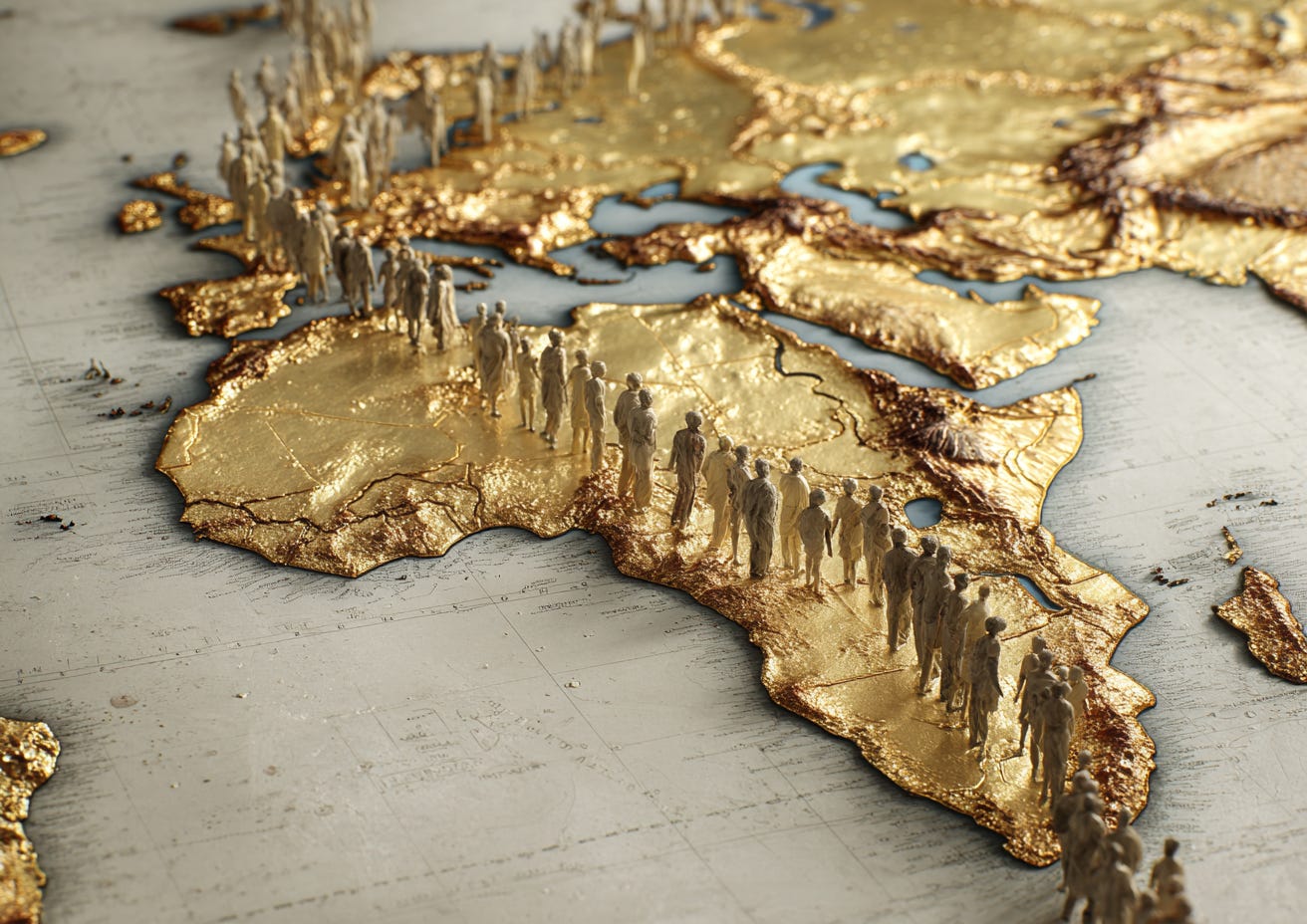
As I’m sure you know, it is all but impossible to destroy gold. Yes, yes, nuclear explosions, blah blah, mercury, aqua regia, but to all intents and purposes gold is permanent. It’s been here since before the earth itself, and it’ll be about long after it’s gone, shining away.
That also means that all the gold that has ever been mined still exists. Some of it has been lost, of course, but it’s still there somewhere, even if it’s sitting in sunken Spanish galleon off the coast of Tobago.
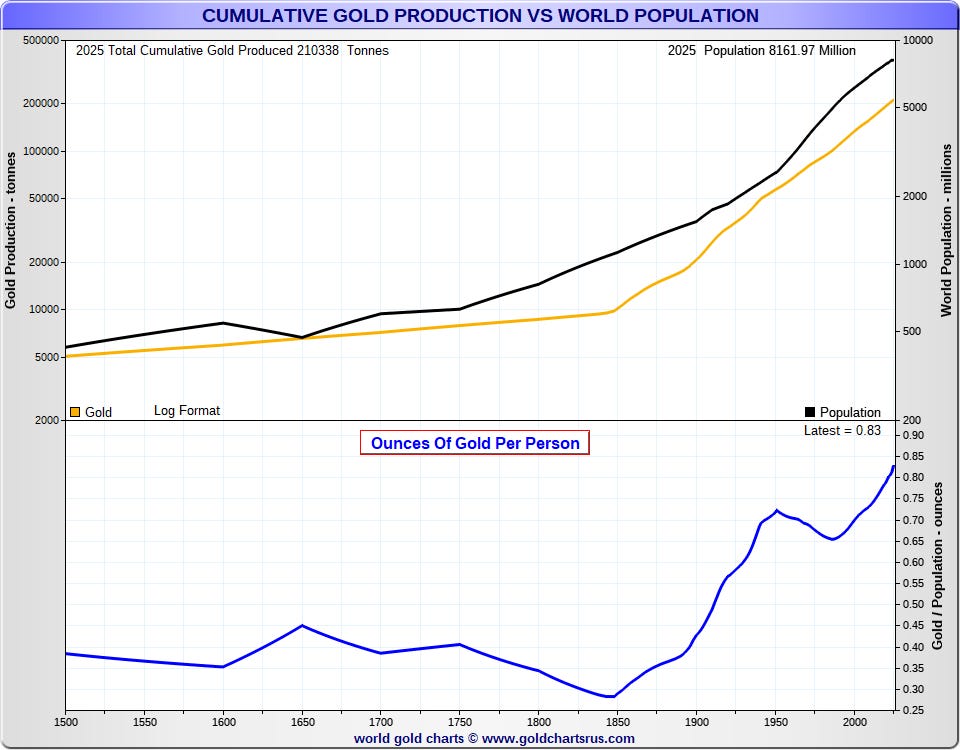
There are just under 7 billion ounces of gold in the world, and just over 8 billion people, so about 4/5 of an ounce per person.
Until the gold rushes of the 19th century, there were roughly 2/5 of an ounce per person.
As you can see by the chart below there is now more gold per capita than ever before.
What’s really interesting, however, is how closely cumulative gold supply tracks global population growth. The two rise at remarkably similar rates over centuries.
Gold supply expands slowly, organically and roughly in line with humanity itself. No central bank planned it that way.
Right there is why gold is nature’s money.
But there are some changes afoot.
Population growth is slowing rapidly. It is actually going backwards in some parts of the world. The Matt Ridley argument is that this is a result of prosperity.
Merryn Somerset Webb thinks it’s even more specific than that. She blames smart phones.
She may have a point. South Korea is perhaps the most advanced smart phone nation. When I went there in 2015 I remember thinking that, technologically, it was a good 10 years ahead of Western Europe. Recently we learn it has the slowest population growth of the lot.
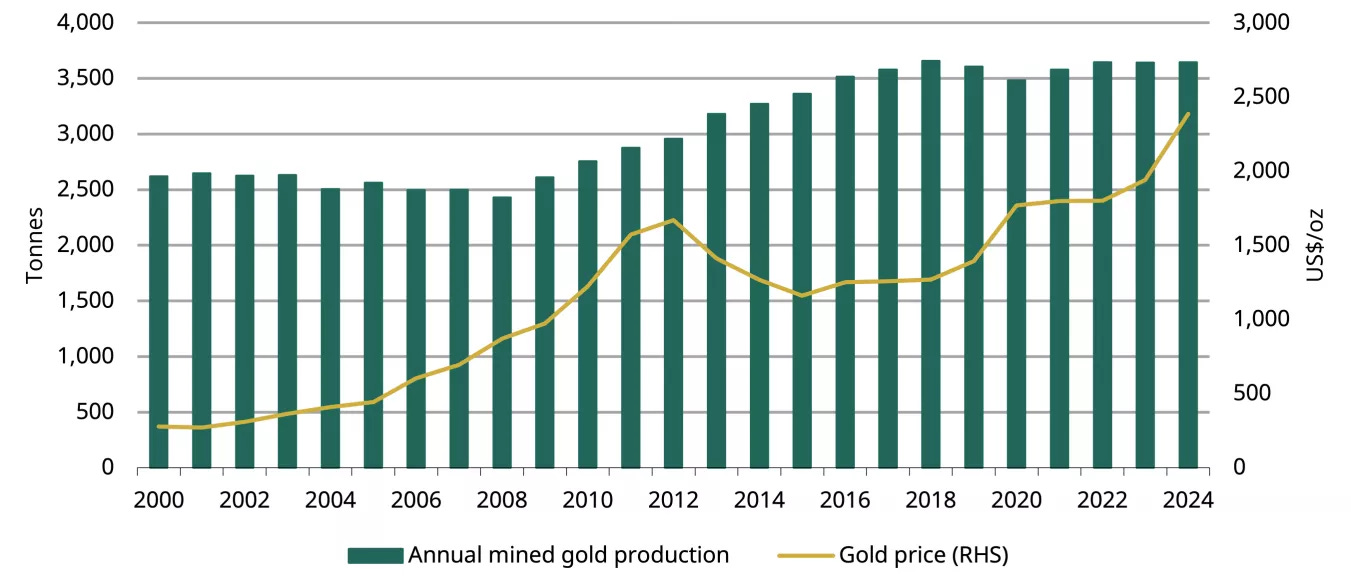
Annual gold mining supply is at record levels, however: 3,600 tonnes last year. Does this mean gold per capita is set to increase?
Probably but there is a big but and it looks like this.
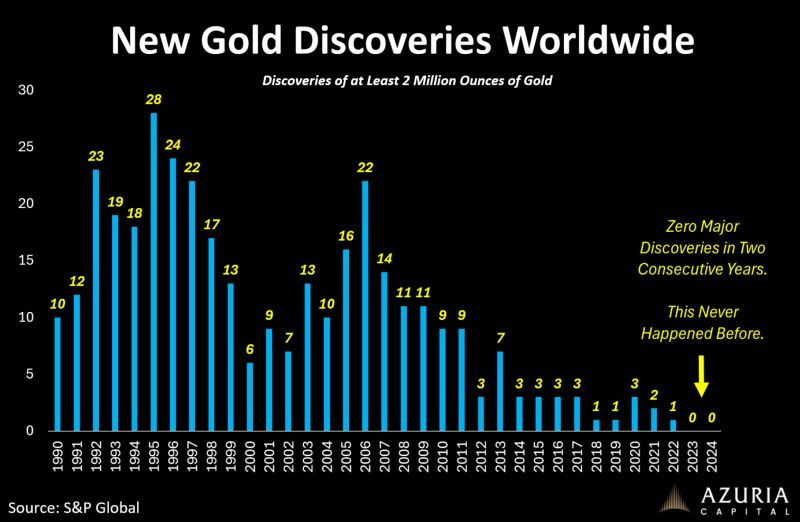
How about that for a table?
No new major discoveries - 2 million ounces or more - in 2023 or 2024. As far as I know there were three in 2025 - in China, in Saudi Arabia and in Iran.
But look at the trend.
We have been below the 10-discovery threshold since 2009. Discoveries peaked in 1995.
The long-term implications of this are enormous.
If you live in a third world country such as the UK, I urge you to own gold or silver. The pound will be further devalued, as will the euro and dollar. The bullion dealer I use and recommend is The Pure Gold Company. They deliver to the UK, the US, Canada and Europe. More here.
Gold is not like other commodities, copper, oil or wheat, say, where annual production dramatically affects price because so much of what was produced previously has already been consumed. Almost all the gold ever mined still exists somewhere, as i say.
But mining supply still matters at the margin.
The collapse in discoveries has not yet translated into falling production because it takes such a long time to bring a deposit into production. The average time from discovery to production is now around 17 years.
But we are now roughly 17 years on from the late 2000s, when the discovery rate began to fall off a cliff.
In other words, we may not be far away from the point where the collapse in discoveries finally starts feeding through into stagnating or declining mine supply.
And unlike previous cycles, there do not appear to be dozens of giant new deposits waiting quietly in the wings.
(Obviously, a higher gold price offsets some of this because lower-grade ore becomes economic to mine.)
Here is the long-term production chart. You can see how supply has largely plateaued over the last ten years .
Perhaps that also helps explain why, after 50,000 years of use (yes, that figure is correct), demand for gold from individuals, institutions and central banks remains so strong.
Lots of interviews to share with you this week
I’ve been promoting the release of The Secret History of Gold in the US.

First up with my US BFF, Tom Woods
On Financial Sense with Jim Puplava (audio only)
On Kitco News with Jeremy Szafron
And, finally, Clem Chambers

Last, but not least, here is this week’s commentary, in case you missed it, looking at the precarious state of the UK’s finances.
Gold Waits While Britain Cracks

It is always nice to be a national of a country that is leading the pack. It makes one proud to be a world leader.
Thank you for being a subscriber to the Flying Frisby.
Until next time
Dominic


