



Good Sunday to you,
Geoffrey Chaucer wrote The Canterbury Tales in around 1400, and it is considered one of the first great works of English literature.
Try reading it today and you might question the “English” part. Here’re the opening lines:
Whan that Aprille with his shoures soote,
The droghte of March hath perced to the roote,
It does not get much easier.
Canterbury Tales is the story of group of pilgrims who walk from Southwark to Canterbury Cathedral. I have done the pilgrimage myself and I would urge you to as well.
The structure is quite simple. To pass the time, the pilgrims have to a storytelling contest and so each tells his or her tale. There are around thirty pilgrims - in effect, thirty professions, and so we get the Knight’s Tale, the Miller’s Tale, the Wife of Bath’s Tale and so on.
Here is the interesting part. Since the story was written in 1400 we have had, off the top of my head, the printing press, the Agricultural Revolution, the Industrial Revolution, steam power, fossil fuels, the internal combustion engine, electricity, aviation, nuclear power, computers, the internet, smartphones and now artificial intelligence.
And yet, if you look the list of characters below, every single one of Chaucer’s professions still exists in some recognisable form today.
You could go all the way back to the dawn of civilisation and argue the same thing. We still have farmers. We still have merchants. We still have lawyers, doctors, religious people, soldiers, landlords, craftsmen, entertainers, administrators and hustlers.
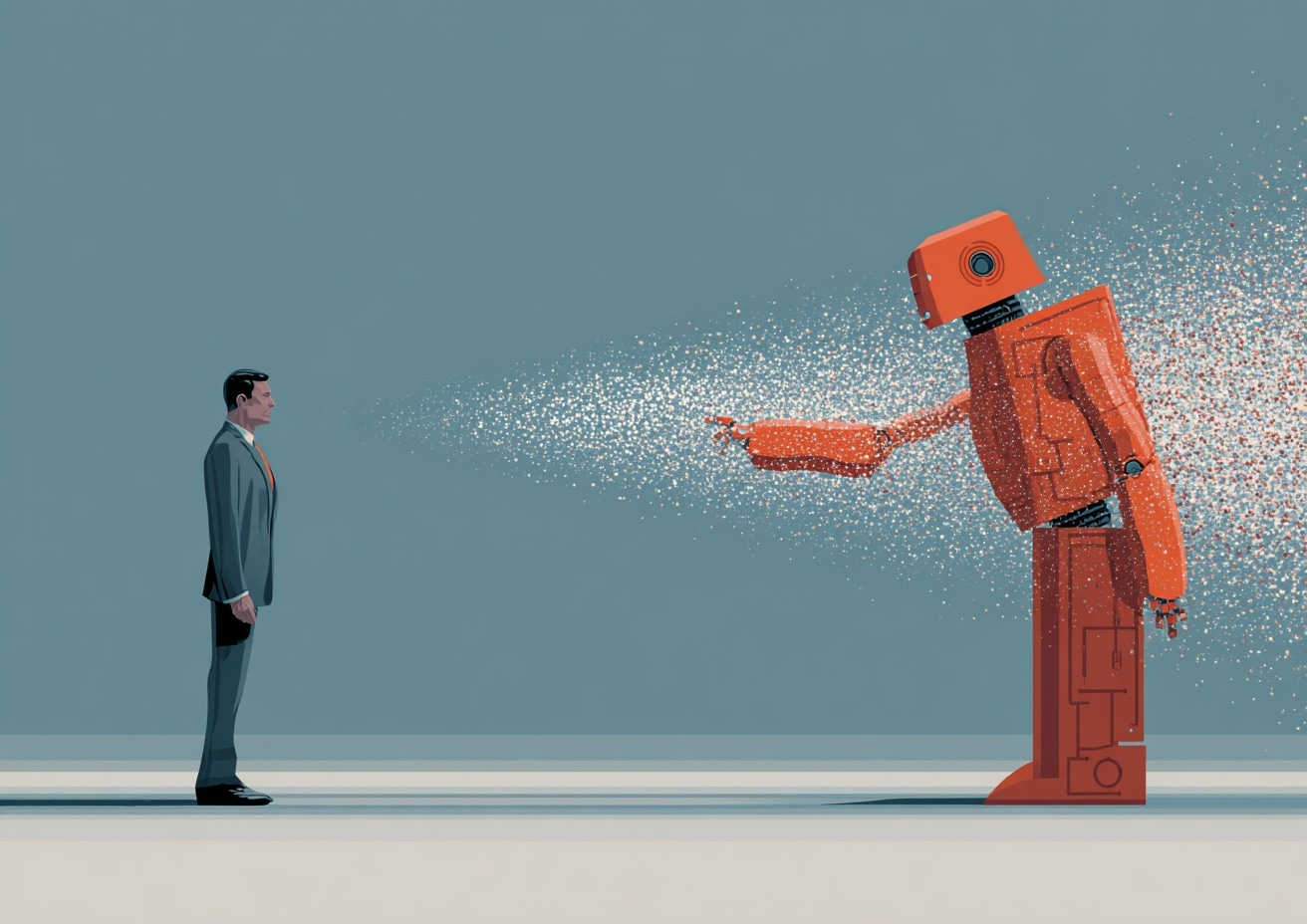
AI will change the nature of the job, but it will not erase the underlying human needs that created it.
Machines put many farm labourers out of work at the turn of the 19th century, but they also generated enormous productivity, which created new industries and new jobs, and, it’s worth noting, productivity which enabled us to be able to ban slavery. The net result was not mass permanent unemployment but rising prosperity.
What Actually Changes
What does get destroyed is power structure.
Feudalism has gone. The Church no longer dominates European politics - not the Christian Church, anyway. Guilds have faded. The landed aristocracy has all but gone.
In their place we have the modern State, bureaucracy, multinational banks, global corporations, Big Tech, Big Pharma, the mainstream media and so on.
AI is more likely to erode existing hierarchies than to eliminate work altogether. It will compress middle layers. It will reduce friction. It will concentrate power in some places and decentralise it in others.
If you live in a third world country such as the UK, I urge you to own gold or silver. The pound will be further devalued, as will the euro and dollar. The bullion dealer I recommend is The Pure Gold Company. More here.
The winners are likely to include: platforms, energy producers, owners of scare assets, large scale infrastructure, those who control distribution. AI is already being used in manufacturing, agriculture and mining, but so much to replace jobs as to increase productivity. You can’t help feeling the physical economy is a better place to be than parts of the digital - at least for now, though I guess robots are next if those Chinese videos doing the rounds are anything to go by.
Who else wins? AI and machine learning engineers, obviously, certain content creators, those who get good at prompting will find it useful for anything from medicine to plumbing to consultancy.
The losers will be among those whose job is mainly to control access to or verify information that AI can now do instantly. Think: interpreters and translators, proofreaders and editors, coders, copywriters and journalists, graphic designers, sales reps, basic financial advisors. I think long-distance drivers’ days are numbered too.
The work doesn’t disappear but the pricing power and margins collapse.
Legacy media distribution - not the content creators themselves, but the distribution gatekeepers who controlled which creators reached audiences. Publishers who mainly performed filtering rather than editing, talent agencies for routine work, certain music labels.
The job may technically exist but the power and economics drain away.
Chaucer’s Cast, Modernised
Finally, below is Chaucer’s professional cross-section of medieval England. I have added approximate modern equivalents.
Narrator – content creator (!)
Host – Event organiser, podcast presenter
Knight – Army officer
Squire – Cadet, trainee officer
Knight’s Yeoman – Bodyguard, fixer, executive assistant
Prioress – Headmistress, senior religious leader
Second Nun – Clergy
Nun’s Priest – Chaplain
Monk – Monk
Friar – Fundraiser, community organiser
Merchant – Import–export, trader, entrepreneur
Clerk – Researcher
Man of Law – Barrister, judge
Franklin – Wealthy landowner, landlord, businessman
Haberdasher – Fashion retailer, Etsy seller
Carpenter – Builder
Weaver – Textile manufacturer
Dyer – Industrial processor
Tapestry-maker – Textile artisan
Cook – Chef
Shipman – Merchant mariner, sailor
Physician – Doctor
Wife of Bath – Self-made businesswoman
Parson – Parish priest
Plowman – Smallholder farmer
Miller – Construction materials supplier
Manciple – Buyer, procurement officer
Reeve – Estate manager, COO
Summoner – Bailiff, compliance officer
Pardoner – Carbon credit broker
Canon – Serial start-up founder, “entrepreneur’
Canon’s Yeoman – Startup engineer
The Real Question
I think a fear frenzy is being whipped up - and I say this as someone who has lost his primary source of income (voiceovers) to AI.
The work changes. The tools change. The leverage changes. The power centres change. The underlying human needs do not.
There will still be farmers because people eat. There will still be merchants because people trade. There will still be storytellers because people crave stories. Most importantly of all, there will still be opportunities, if anything there will be more of them.
AI will reduce headcount in some sectors. It will elevate productivity so dramatically that fewer people are required to produce more output. That is economic evolution.
If you are worried about AI taking your job, ask yourself this: are you positioned inside an old power structure that is about to weaken? Or are you aligned with the next one forming?
Until next time,
Dominic
ICYMI here is this week’s commentary

Finally, Charlie Morris and I appeared on In The Company of Mavericks this week to discuss what’s been going on with gold, silver and bitcoin. (Charlie writes Atlas Pulse which I heartily recommend. Get your copy here - it’s free.)
Links to Spotify and Apple podcasts are here:


