



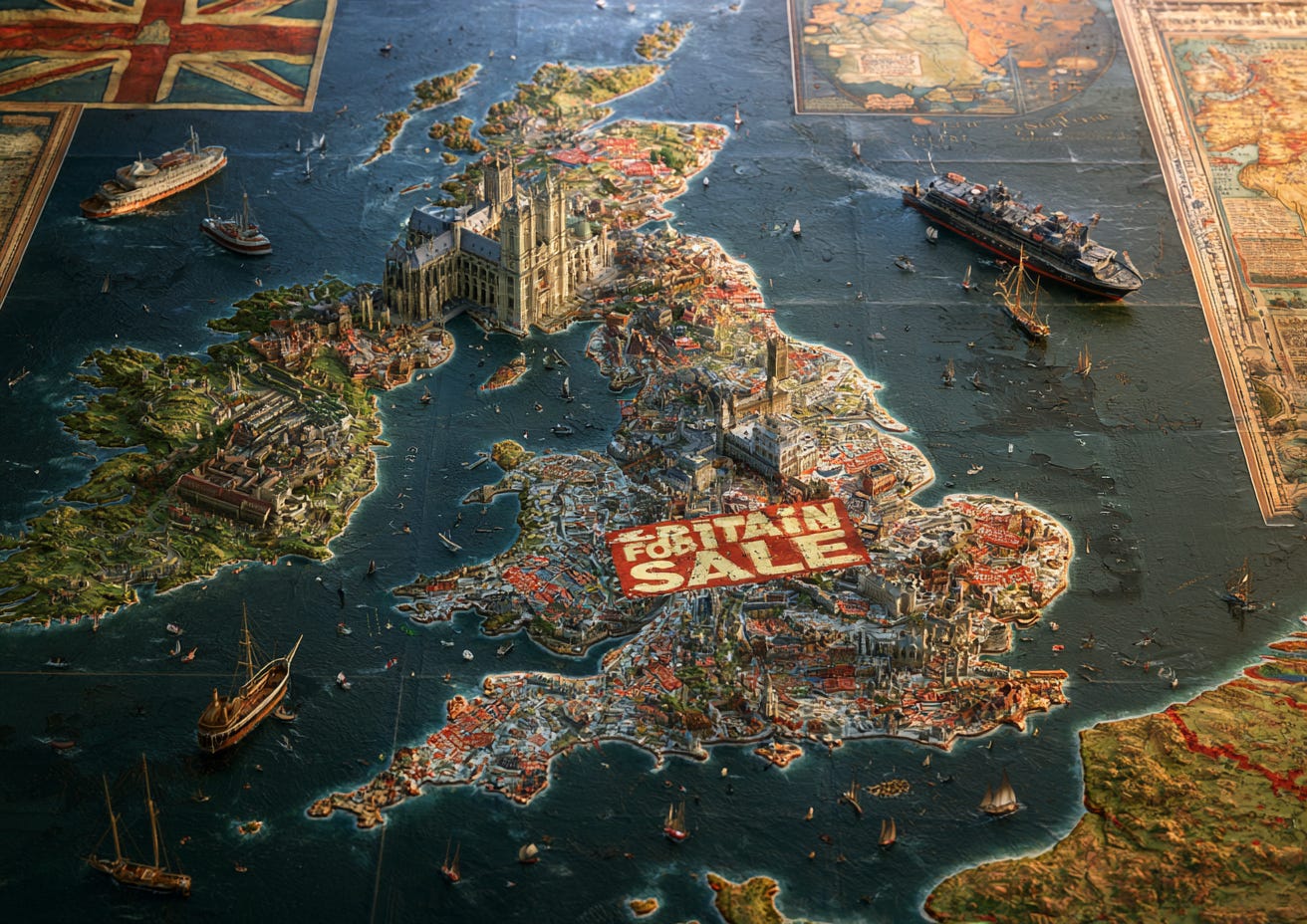
How do you make money investing in the UK? Own a good company and wait for an American to buy it.
So runs the City joke. Except, if the last couple months are anything to go by, it’s not a joke. It’s true. The floodgates have opened
In June, US ingredients giant Ingredion agreed to buy Tate & Lyle for £2.7 billion, paying a 59% premium.
Then, in early July, Apollo gatecrashed Castlelake’s pursuit of easyJet. Castlelake had already made five approaches. Apollo’s proposal effectively valued the airline at an 80% premium.
Next Reuters reported that Watches of Switzerland had held takeover talks, with buyers circling despite the shares already having risen more than 50% this year.
Two days later, Swiss engineering giant ABB agreed to buy Rotork for £4.1 billion, a 73% premium to where the shares had traded before the approach became public.
Five days after that, OCS, backed by US private equity house Clayton, Dubilier & Rice, agreed a £3.1 billion takeover of Mitie.
The following day, US warehouse giant Prologis returned with what it described as its “best and final” proposal for SEGRO, valuing the company at about £14 billion, a 45% premium. Its board, after initially resisting, said it would recommend the offer if a firm bid followed.
A few days pass and Ridgeview agrees to buy Pinewood Technologies, and Serica trumps a rival bidder to acquire Pharos Energy.
It is a veritable feeding frenzy. “Almost 300 bids have been made for UK-listed companies in the past six years,” says equity research firm Edison, “frequently at premiums of 40-60%”.
British investors have spent years complaining that UK equities are cheap. Overseas buyers appear to agree and are doing something about it.
Private equity still has lots of capital that needs to be deployed, and valuations are compelling, especially with the pound having been weak since 2008. So when there is a strategic fit, they bite. You don’t pay generally pay 40 to 80% premiums unless you believe the market has materially undervalued what you are buying. London is systematically undervaluing its companies.
The British have not been buying. Why? For decades, UK pension funds were among the largest owners of British shares. In the early 2000s they allocated over 50%. Now it’s just 4-6%. Instead they favour bonds and global equity funds. Passive investing has accelerated the trend. Billions of pounds flow into global indices every month, but only a tiny fraction finds its way back into UK-listed companies because Britain now accounts for such a small percentage of the world’s stock market. Valuations fall, even if the underlying businesses continue to perform perfectly well.
Many of Britain’s quoted companies earn their revenues overseas: global businesses with a London listing. Yet they are often valued at significant discounts to peers in the US and continental Europe, and those discounts have, after years of saying it, finally become too tempting for strategic buyers to ignore.
Britain’s stock market is not merely cheap. It is shrinking. In 1996 there was 932 companies in the FTSE All-Share Index, as Charlie Morris notes. Today there are 536.
Some have merged. Some have failed. Some have moved their primary listing elsewhere. Many have simply been bought and taken off the market altogether. Every successful takeover may leave investors with cash, but there is also one less quoted company in which to reinvest it.
A smaller market attracts fewer investors. Fewer investors mean less liquidity, lower valuations and, in turn, more takeover opportunities. It is a self-reinforcing and vicious cycle. London has become perhaps the cheapest developed world equity market.
Buying shares in anticipation of a takeover bid is not always the best investment strategy. Rumours often come to nothing, and not every business gets acquired. But if you can find companies that are undervalued, financially strong and strategically attractive, then a takeover becomes the potential icing on an already attractive cake.
I asked one of my WhatsApp group chats for ideas about likely takeover targets. I got this reply: “At this stage it’s easier to list the UK companies that will not be sold to the foreign overlords”.
So who will be next? That’s what we all want to know.
Over the next few weeks I’m going identify what I think are the ten most likely companies to be taken over.
And this week we have three prime candidates. Starting with …


