



Good morning to you and a big welcome to the many new subscribers, both paid and unpaid, who have joined the Flying Frisby this week.
We are now the Number One riser in Finance and Number Two in the UK, so we must be doing something right.
If you have not yet received your Britain On Sale report, you can access it here. (Any issues getting hold of it, DM me or reply to this email - paid subscribers only).
So to today’s piece, and an important one, I think, as this is going to be a big theme over the next few years.
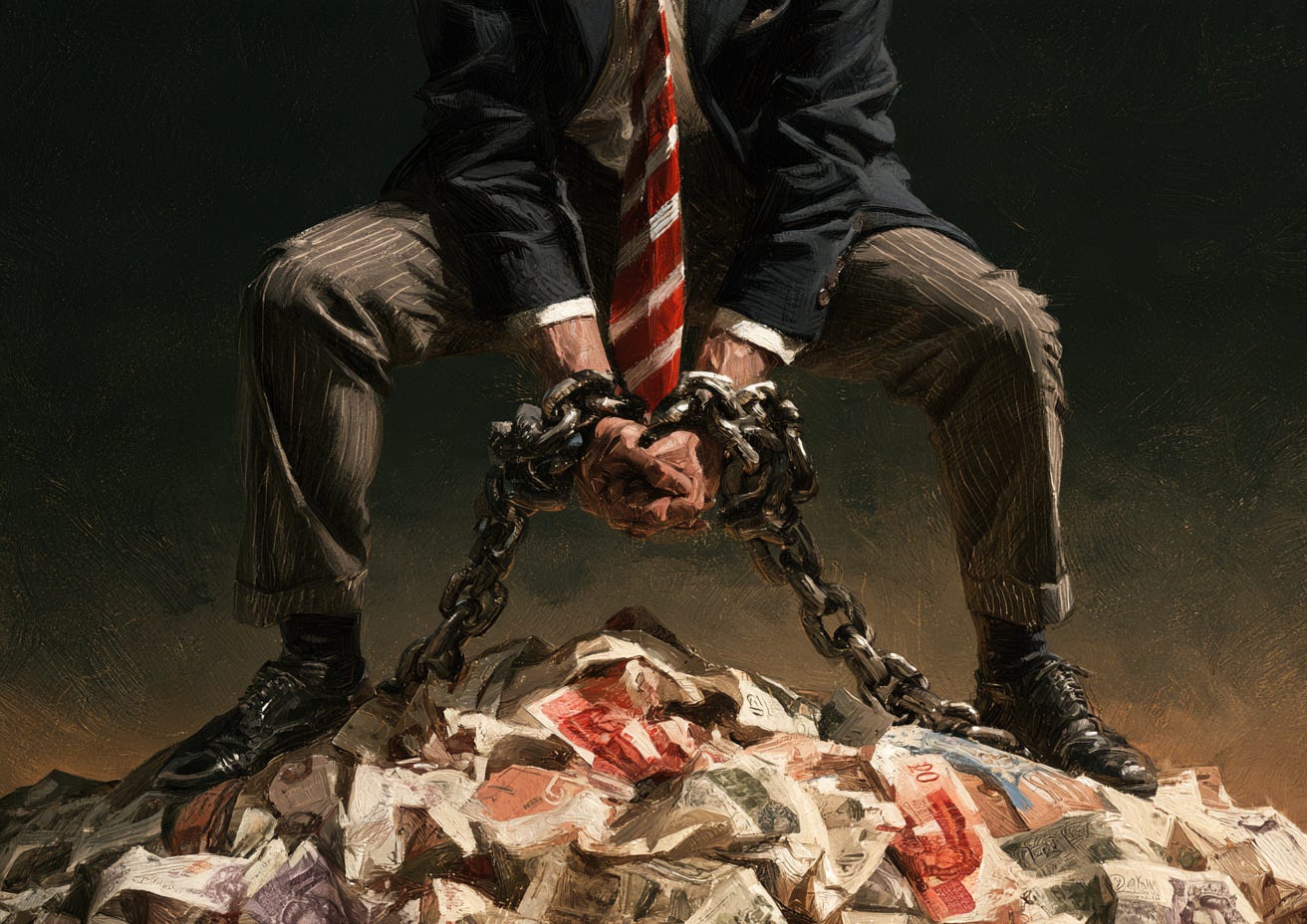
The government is coming for your money.
You’ve earned it. They haven’t. Don’t let them confiscate it from you, is my advice. I’ll explain all.
The same situation applies across the western world, but I am going to focus on the UK today.
We begin with this Russell Napier interview with Peter McCormack. If you haven’t already watched/listened, I urge you to. It is well worth your time. Napier’s forecasts, which chime with my own, have grave implications and you are going to need to protect your capital.
Napier is a market historian of the old guard, highly respected and, I might add, with good reason. He gets a lot of big calls right.
He describes the situation in the UK and indeed most of the West, which we all know. Public sector finances are a mess: bloated, wasteful, deep in debt, an accident waiting to happen.
To give you an idea how bad, here’s Dan Hannan, Director of the Institute of Economic Affairs:

But before you go all out and despair about the decline of Britain, Napier also describes a private sector which is in good shape, lean and hungry. This is an observation we have also made on these pages and why we have been beating the drum that now is a good time to buy British stocks. Hence this report.
Britain needs growth, if it is to get out of its mire of government debt, but is not going to get growth while taxes are high and regulation is heavy. All that is required is to unleash growth is government to get out of the way. But it is incapable of doing that. Indeed this current lot shows no sign of wanting to lower tax or lighten up on regulation, so we are caught. Nevertheless, there is this lean beast waiting to escape and that is a positive thing.
Moreover, the country needs a huge amount of investment as it moves away from dependence on China for its manufacturing - which must happen for strategic and political reasons. The balance sheet is there in the private sector, says Napier, to make that investment.
It might be that some kind of pragmatist comes to power or, more likely, that someone is forced to be pragmatic by the bond market. But we are not there yet.
That’s the backdrop. Let’s come now to Napier’s forecast. Our current total debt, public and private sector, stands around 235% of GDP. We are bad but by no means the worst. (Napier is particularly bearish on France, by the way).
There are five ways in which we can lower that debt: growth, default, austerity, repression or inflation.
You’d need 4% growth which he sees as unlikely, even with the productivity boost that is coming from AI. Austerity is also unlikely because of the Labour backbenches and the numerous promises made and obligations it carries. Default would take too long to recover from (Napier uses the example of Greece). That leaves financial repression, with inflation doing much of the work.
Repression and inflation is easiest solution, because it affects fewest people visibly. Visibly is the point. As we know, politicians always choose the path of least resistance.
What does repression mean in practice? There are pots of wealth in savings, in insurance and life funds, and in pensions, and the government is coming for it. The biggest victims or targets of this will be old people, for the simple reason that they have the most money. That is where the capital is. Governments will go where the easy capital is
I would also add houses to the mix as they are tapping that market too.
This wealth grab is all happening quicker than we realise. Mansion taxes are coming, as we know, and word is the threshold will be now brought down from £2 million to $1.5 million. (Talk about mendacious language - anyone know where I can buy a mansion in London for £1.5 million? You can barely get a terraced house for that in Zone 2)
Meanwhile, last week the Bank of England did not put up rates, as it should have, were it to honour its mandate to bring inflation down below 2%. Their measure of inflation is 3.1%!
The Bank also announced that it will no longer sell the gilts it printed the money to buy through Quantitative Easing (the ones it started selling the day before the Liz Truss Kwasi Kwarteng budget) but instead hold them to maturity. This will considerably reduce selling pressure on the gilt market. If I were Liz Truss or Kwasi Kwarteng, I’d be fuming.
But both moves mean yields payable - ie the cost of debt - will not properly affect real inflation or market forces. But who actually understands the sleight of hand that is taking place here?
Napier uses the example of a French 50-year bond bought in 2021, as having lost more than 75% of its value. The debt was bought by pensions. The individuals that effectively owned it through their pensions don’t even know that they bought it because it’s hidden in balance sheets, locked out of reach. That’s how this particular raid can effectively be kept a secret.
The government is going to force people to buy these bonds. Many will not even know they are doing it, as it will happen remotely via pension funds. Napier calls it “the power of the mandate”, a great term. The UK government already has this power to some degree, through changes to the regulatory framework which can influence what pension funds are permitted or encouraged to hold. (Governments elsewhere in the world that do not currently have this power will soon acquire it, don’t you worry).
By forcing people to buy bonds, they keep interest rates down, and so the government will be less beholden to “the market” when it wants to borrow and spend.
There is plenty of previous for this, bond sales during wars being a prime example. Some kind of regulation will be imposed that demands safe investments and of course bonds and gilts will be deemed safe.
This repression will be enacted, effectively, by stealth, and governments will get away with it because it will happen, as both Keynes and Lenin famously observed, “in a manner which not one man in a million is able to diagnose.”
Imagine a government that just cut taxes and spending instead. We can but dream. It’s all so dishonest. That’s what I hate about it.
I was always taught that saving was a good thing, but saving will be villainised. This immediately makes me think of the US in 1933, a story which I cover in the book. When Roosevelt introduced the gold surrender programme, he villainis ed hoarding gold and blamed hoarders for America’s woes during the Great Depression. But hoarding gold was just saving and that’s what people do. Saving will be somehow villainised, and we will all be required to “play our part” as Andy Burnham put it when imposing illegal immigrant camps on rural villages which don’t want them.
The subscription price goes up at midnight tonight. If you want to lock in the current rate, now is the time to upgrade.
So what can you do? And how do you protect yourself? Where on earth do you put your money?


